Heidelberg Heritage Museum - Sedibeng, Gauteng
 Heidelberg Heritage Museum © Heidelberg Heritage Museum
 Heidelberg Heritage Museum. (Image adapted). © Heidelberg Heritage Museum
Heidelberg Heritage Museum - Sedibeng, Gauteng
Housed in Heidelberg’s beautifully restored former railway station, the Heidelberg Heritage Museum is one of the town’s most interesting links with South Africa’s past. The sandstone station building dates from 1895 and was part of the railway network that helped transform Heidelberg from a small inland settlement into an important regional centre. Today, the museum precinct tells stories of the town, its people, transport and the turbulent events that shaped the wider Transvaal, making it a worthwhile stop for visitors interested in history and heritage.
Heidelberg itself was founded in 1862, when Heinrich Julius Ueckermann established a trading post in the area. The town was laid out a few years later and named after Ueckermann’s former university town in Germany. Heidelberg subsequently acquired considerable political importance: during the First Anglo-Boer War it served as the temporary capital of the Zuid-Afrikaansche Republiek from 1880 to 1883, when the triumvirate of Paul Kruger, Piet Joubert and Marthinus Pretorius governed the republic. The arrival of the railway added another important chapter, with the station becoming a gateway for people and goods moving through the region.
The museum's railway heritage is particularly appealing. Old locomotives, railway coaches and other transport-related exhibits recall the age when steam trains were central to South Africa's development. The station also has connections with some remarkable historical figures. Mahatma Gandhi, Winston Churchill and the Duke of Connaught all passed through Heidelberg during the era when the railway was an important means of travel. Gandhi’s association with the town has received particular attention, and a bust of the Indian leader was unveiled at the museum in 2024.
The museum has also evolved beyond a conventional collection of artefacts. At various times the precinct has included restaurants, a coffee shop, craft brewery and children's facilities, while heritage tours have explored Heidelberg's historic buildings and sites. Guided tours have included the former railway station, the town centre and places associated with the Anglo-Boer War, as well as a separate Ratanda tour exploring the area's liberation history. For visitors, this makes the museum a useful starting point for understanding Heidelberg rather than simply a place to view old objects.
There is, however, an important caveat for anyone planning a visit. The Heidelberg Heritage Museum is currently listed as temporarily closed. Its future became uncertain during 2025 amid a dispute between the museum's management and the Lesedi Local Municipality, involving questions over management arrangements, municipal services and the occupation of the historic property. Electricity was reportedly disconnected during the dispute, while concerns were raised about the condition and future management of the site. The museum has previously received substantial public investment for restoration, making the uncertainty particularly significant for a building of such heritage value.
Consequently, travellers should not currently arrive expecting a normal museum experience. The museum's own website remains online and continues to advertise heritage tours, museum visits, beer tastings and other activities, but the current closure status means that it is essential to make direct contact before travelling. The historic railway station and its surrounding heritage remain worth knowing about, even while the site's future is being resolved.
Address: Corner of Voortrekker and Peperboom streets, Heidelberg, Gauteng, 1441.
Telephone: 082 671 6595 or 082 556 8856.
Email: info@heidelbergheritagebeer.co.za.
PLEASE NOTE: The museum is currently listed as temporarily closed. Prospective visitors should confirm reopening arrangements before making a special journey.
Verblyf Naby Heidelberg Heritage Museum - Sedibeng, Gauteng
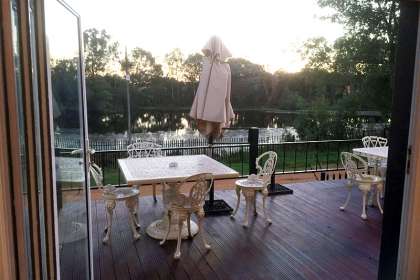
Bri-Shel Manor B&B
Bed & Breakfast Accommodation in Heidelberg
2.4 km van Heidelberg Heritage Museum - Sedibeng, GautengBri-Shel Manor is in Heidelberg geleë en is 'n unieke 4-ster-instansie wat luukse verblyf bied wat volledig toegerus is met gratis wifi, geriewe, DStv, pragtige linne, lugversorging en elektriese onderkomberse. …sien meer vir besprekings / navrae en inligting.

Mooi Begin Guest Farm & Venue
Self Catering House, Cottage, Chalet Accommodation in Heidelberg
12.9 km van Heidelberg Heritage Museum - Sedibeng, GautengMooi Begin Gasteplaas & Venue (voorheen: Yesterday Today Tomorrow) skuil in die pragtige Suikerbosrand-heuwels en grens aan die Suikerbosrivier. Slaap rustig in 'n 6- of 4-slaaphuis. Ons het ook verskeie 2 slapers. …sien meer vir besprekings / navrae en inligting.
- Heidelberg Industrial (0.25km)
- Heidelberg (1.13km)
- Rensburg (1.79km)
- Jordaanpark (2.91km)
- Noycedale (12.04km)
- Glenverloch (12.88km)
- Nigel (13.22km)
- Ferryvale (13.25km)
- Visagiepark (14.14km)
- Prosperita (14.82km)
- Laversburg (15.48km)
- Vosterkroon (15.81km)
- Sharon Park (19.78km)
- Selcourt (21.86km)
- Selection Park (23.41km)
- Heidelberg Golf Club, Sedibeng - Gauteng (0.78km)
- Heidelberg Hospital - Sedibeng, Southern Gauteng (1.65km)
- Alice Glockner Provincial Nature Reserve - Heidelberg, Gauteng (6.09km)
- Suikerbosrand Nature Reserve - nr Heidelberg, Southern Gauteng (12.47km)
- Nigel Golf Club - East Rand, Gauteng (14.37km)
- Nigel Dam - East Rand, Gauteng (15.05km)
- Diepkloof Farm Museum - Suikerbosrand Nature Reserve, Heidelberg (15.64km)